This blog is part of an online learning platform which includes the Pathways to New Community Paradigms Wiki and a number of other Internet based resources to explore what is termed here 'new community paradigms' which are a transformational change brought about by members of a community.


It is intended to offer resources and explore ideas with the potential of purposefully directing the momentum needed for communities to create their own new community paradigms.


It seeks to help those interested in becoming active participants in the governance of their local communities rather than merely passive consumers of government service output. This blog seeks to assist individuals wanting to redefine their role in producing a more direct democratic form of governance by participating both in defining the political body and establishing the policies that will have an impact their community so that new paradigms for their community can be chosen rather than imposed.


Showing posts with label World Cafe. Show all posts

Wednesday, February 18, 2015

Exploring with the Dialogue, Deliberation and Systemic Transformation Community to Discover New Possibilities Part 3 of 3

In addition to the World Cafe platforms participated within, as described in the last two blog posts, part 1 and part 2, I also participated in three of the fifteen Open Space conversations that were initiated by others, OS Topic 5: Super-ordinate Goals, How do we understand the system that is changing?, and A Supersaturated Theory of Change. Due to the complex nature of the questions being pursued, metaphors played an important role in getting ideas across. Complexity was itself a key issue and often necessitated metaphors to assist in making the concepts coherent.

The first interaction' on January 13, 2015, was OS Topic 5: Super-ordinate Goals.  The description for the goal was, "What  super-ordinate goal could replicate across the collective set of value systems, and act as a "guiding star" for systemic transformation?” It was presented by Ben L. as, "What everyone wants, but no one entity can do themselves." Ben was one of those who introduced me to Spiral Dynamics.

Heather T., back this time as we had both independently selected for this particular topic, spoke of "Healthy Human/Healthy Planet" as a possibility.  Heather sought out nature metaphors or analogies, as in acorns ‘become' oak trees. I suggested birds moving in a ‘flock' introducing the idea of complexity, which others saw as extending to living human/living earth allowing for seeing ‘both/and’ while moving away from ‘either/or’.

I again introduced an alternative concept, as a means rather than a goal, that I have been shaping for some time.

“Clayton Christiansen's idea of Disruptive Innovation might be applicable to social change. "From scarcity to abundance" (again, as asserted here and here) as another frame that might bring people into the fold. People are so scared of financial and environmental disasters, that they don't want to act.”

Another challenging perspective which with I could agree was developed by Stephanie Jo K based on Hans Rosling’s TED Talk, The Best Stats You've Ever Seen

As she said, he says, “The improvement of the world must be highly contextualized, and it's not relevant to have it on regional level. We must be much more detailed. We find that students get very excited when they can use this."  She then goes on,

“The point being twofold, (a) our misconceptions are probably thick, and (b) what will motivate people not only metaphorically but literally depends on their lived social reality. If one starts from above (the example Hans Rosling gives is wealth), no significant or automatic improvement in the baseline (in this case, health). You must invest in the ground, in the local, and-most importantly from within the local context in order to participate in processes leading to tangible change.”

For the January  25th, the Open Space conversation, I participated in “How do we understand the system that is changing?”, led by Chris S.  
,
Once again helped with scribing and editing while at the same time participating but this time there was a greater intermix between the iterations of what I wrote on behalf of what others had said, and what others wrote on what I had said, creating something new that I would not have come up with solely on my own. 

The conversation appealed to Complexity Theory as a means of expressing a complex view of what is changing, what fails. Metaphors were still an essential component of communicating complex ideas. 

One was a metaphor of being together in the boat, trusting people to be mutually dependent. Having others seeing what we cannot. A River metaphor, used in the session's introductory remarks by Mark Dubois, co-founder of Friends of the River and the International Rivers Network, was used for expressing the inclusion of, ‘various agents, obstacles, currents taking us in a direction, navigating by strength or dancing with the river. See different parts of the river depending upon where you are.

Taking a more empirical, data driven perspective, I pointed out that both the Economist Intelligence Unit and Harvard Business Review had also warned of the impact of complexity upon our societies.

This did not, however, result in any divergence. It was still apparent that our values are, “…being shaken and bruised our values are speaking to us.  Old, old of unstructured times transformed into, old, more recent of structured - Newton - reductionism - industrial - complicated to a new way trying to impose order on the emerging more complex world.  Today, what we Need is a new new way that embraces complexity and seeks coherence within complexity.

As has been previously asserted, complexity, as it relates to us, can come in two different forms, incoherent (where we feel powerless) and coherent (where we can see a dance path).

As Chris S pointed out, it is the synthesis of the different ways of understanding systems that can lead us to the elements of storytelling which can help to define complexity in a manner similar to what makes a great story. Stories can help make our complex world coherent.

In what ways is this problem complex?
1 Many interacting “agents”
2 Individuals and processes influence each other in feedback loops
3 Reactions may be affected by current and past circumstances
4 Influenced by the external environment
5 Events have multiple causes and multiple effects
6 Large events can have small effects and small events can have large effects
7 Events emerge in surprising ways, spontaneously in the absence of a “controller”
8 Events display a complicated mix of ordered and disordered behaviour
9 It is an emotional Issue

Returning to the metaphor of a river, it was recognized that there was a need for, "balance between structure and flow - creating just enough structure so that flow can happen." "Leadership/Direction and personal empowerment/self-discovery - Having just enough leadership so that others are not disempowered."

I pointed out though that flow can potentially change structure. Citing a recent and relevant point made by Gene Bellinger in a different forum, "The riverbanks govern the flow of the river until the next flood when the river redefines where it wants to flow."

"World also feels and appears more incoherent when pressures build up. On the river, instincts say lean away from the wave but truth is to lean into it to get through."

Being an apparently diverse group, another perspective raised was that of an Operational Risk Management insight: problems reveal connections usually hidden. The lesson, we miss connections that are needed. One can never dig into too deep into the systems.

The last set of interactions I had with the DDST Community was A Supersaturated Theory of Change lead by Ben Roberts, followed by a Live conversation with Ben, Brian and Jock as a follow-up to 1/25 Open Space Session.  The conversations were again based on a metaphor, this time one based on chemistry. This particular conversation demonstrated that the good thing about metaphors is that they are open and susceptible to interpretation, the bad thing about metaphors is that they are open and susceptible to interpretation.  I fluctuated in my affinity with this specific metaphor but regardless, Ben was able to generate a good deal of relevant resources suggested by it. 

Opportunities for supersaturating solutions now
  • Lessig's May Day campaign?
  • Bringing top Down and Bottom-up leadership together
  • Business Alliance for the Future
  • Appreciative Inquiry opportunity
  • Participatory Budgeting
  • A trans-local opportunity
  • Climate Justice Alliance & Divest/Reinvest (out of fossil fuels and into the "new      economy")

The journey created traveling along these pathways doesn’t end here. This was only one pathway that happened to be transversed by me. There were dozens of different ones taken by others and even more possible. This search for possibility travelogue only touched upon the surface.  My own journey though, for now, will end with Harvesting Pad 11: Brian G. Dowling (which no longer links to the correct map)
Exploring with the Dialogue, Deliberation and Systemic Transformation Community to Discover New Possibilities Part 2 of 3

Continuing the tour of the engagement with the Dialogue, Deliberation, and Systemic Transformation Community from the last blog post, December 15, 2014, DDST Community World Cafe had 6 spaces for the second round of conversations. I was assigned to Round 2 to Room 27 to continue by addressing the question, "What would keep you coming back?” 

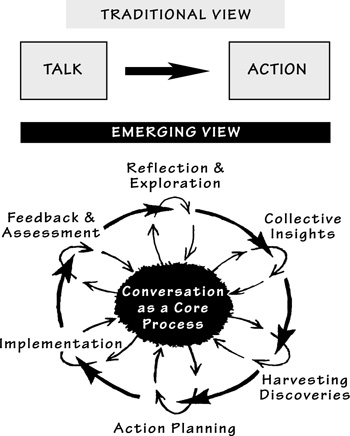
The initial and guiding thought came from Ben K, “I would have to see action and progress - one of the Achilles heels of this kind of thing is a lot of talk - when talk is detached from action, it's detached from reality”, to which I wrote and came to believe that we needed, "More insights - we need action, but sometimes we need spaces that give us a sense of connectedness and foundation - the change we're going for is so large, that we'll need that connectedness to help us reach the tipping point." 

Also agreed with others who called for the need to, "Transcend the duality - Iteration and integration between talk and action. What of our actions have worked, and what have not worked? Blue sky thinking valuable, risk of getting stuck in it, thus the need for integration.”  Also, the need to, "Be in ‘dialogue' with the world/reality."

For myself, the primary inspiration was the possibility of collective thinking bringing people together to face wicked challenges through both our technology and our deeper understanding of community and change. Crucial to that success though was learning how to govern our communities without being entrenched in our current systems of government institutions and political power.

The next World Cafe session on January 6, 2015, increased to a total 20 separate spaces for conversations and went for three rounds. Round One Room 14 for World Cafe discussed the assigned topic, "What is alive in you that could pay a role in what we need to discover and do?" which was a bit touchy-feely for my taste. In the conversation, I admitted to being, “More comfortable with ‘hard’ system practices such as visual diagrams...using Causal Loop Diagram and other relational  maps and finding ways to bring hard and soft practices together in community governance venues/practices.

The touchy-feely aspect came forward more so with, "The energetic vibration of love. Curiosity...engaged in a research project on ‘love'--finding the language of love--seems like ‘love' is following me." , put forward by fellow DDST community member Heather T., who called herself and seemed a definite INFP, and who was interested in creating a thriving, resilient local food system. 

Heather, although coming from a  noticeably different psychological perspective zeroed in on what I also saw as one of the primary challenges facing us. She raised the issue, “How do we speak to the differences we are (e.g., Meyer-Briggs, etc.) or other ‘groups’ (e.g., Tea Partiers)?” and later “Am sensing something biased by personal choices--seeing opportunities that are showing up and the ‘larger’ crises; seeing my connections and where I have traction. How to invite/relate to those who are ‘different’; see who shows up in front of me as ‘different'...don't go looking for them—“

From my own vantage point, I contributed that, “Empirical evidence shows that attempting to convince people that they are wrong in their views only makes them hold on to them all the more firmly. Our current systems, especially in political governance is competitive, winner take all.  As Linda says, (in prior introductory comments) many feel unable to contribute because they don't see themselves as experts, a perspective often encouraged by institutions. “  

For Round Two Room 20 for World Cafe on Jan 6, 2015, the topic was: 
Imagine collaborating on some thrilling initiative that is making the difference we most need...  

As each round of a World Cafe brings new people together, I mentioned again being a retired redevelopment project manager, this time though to assert some credibility in stating that many practices by governments were detrimental to community governance and that I was instead looking for more participative community paradigms. 

The conversation turned to the concept of WE space. Heinz  P., a German living in Canada asserted, “The WE space will tell us what to do”. To which Rachel E. asked, “Can you unpack WE space?” 

It involved, we were told, inviting higher consciousness to see from where the calling was based on an (EVOLUTIONARY COLLECTIVE) that we are going into as a whole system, space which wants to evolve. New ways of doing things have to come from that space, not individual space.

This raised some others of my ongoing perspectives.

“We try to create new systems but entrenched systems must be addressed at the same time. Find systems of disruptive innovation to move from scarcity to abundance (as asserted here and here). Clayton Christensen at Harvard has a theory with commonalities. Systems of control and power that have a pretense of democracy need to come up with new ways to break the stranglehold. Not just disruptive but also innovative to give people power they need to make changes.”

Heinz raised the possibility of, “Working nonlinearly? Unexpected possibility not normally available to us?

My response, “Yes, entrenched manipulative power keeping things from changing can be overcome by means which creativity is opened up ... creation and destruction seem to go together…"

Heinz, “Creating, which I'm excited about. Shiva is creative and destructive at same time. by dancing!”  Which the group seemed to agree was a "Great metaphor for complexity."

Jeff A. introduced us to the, "Two Loops model by Meg Wheatley and Deborah Freize and friends has great value for people understanding the systems change that they are in, and how to be allies with others who are working in different aspects of the old system dying and a new system emerging." It is explained more fully here by this Two Loops: How Systems Change video and is based on the Berkana Institute Our Theory of Change arising from the article Lifecycle of Emergence - Using Emergence to Take Social Innovations to Scale, by Margaret Wheatley & Deborah Frieze, 2006.

Round Three Room 31 for World Cafe on Jan 6th, 2015 asked, ”Sensing into everything you've said and heard, what's taking shape here?"  

Neither I nor Heather T., who ended up again with me in this round, were as of yet not seeing what's taking shape as it was so big and complex and would we felt take a few days of reflection. I am still reflecting.  

Unfortunately, I  had to miss the January 29, World Cafe for DandDTrans. There were two conceptual bridges used to begin to tie together the diverse variety of ideas presented so far. The graph below taken from The World Cafe by Juanita Brown and David Isaacs, and Fungi as a metaphor for DandDTrans, created by Ben Roberts, who was the primary force behind the DDST Community.  Metaphor played an essential part throughout the engagement.


Thursday, August 23, 2012

Governance by the Community or Not - Getting with or past City Hall

Yesterday's post took a second look at the concept of community governance in which a community could potentially govern itself without handing over a  major influence on their collective lives for four years to a city council.  This is taking the perspective to its most extreme.  In practice, communities would likely maintain some form of city government within a city hall.  What it points out is that anyone, whether through a civic organization or just getting together a group of friends, could arrange for community meetings to allow people through a deliberative decision-making process to have their say on matters affecting their community.  There are a number of organizations that can assist with this as can be found in the Community Governance.  This is not to discount the challenges in doing so but it is not necessary to get permission from an institutionalized form of government power.

Taking a decision process that has substantial effect on our communities out of an arena of adversarial political competition and instead using organizations such as The World Cafe Community to create and experience deep and meaningful conversations about those things that really matter or using AmericaSpeaks to create an opportunity to have a strong voice in public decision-making on issues affecting our communities is achievable.

If such a community meeting were put together by some concerned citizens, it could be with the sponsorship of city hall.  Often times this happens through such efforts as strategic plans or economic development studies.  Unfortunately, because direct deliberative democracy is not the norm there is a flurry of activity for a short time then these plans and studies often end up on the shelf without follow-up and without any substantial changes being made. It could also be done in parallel or independent of city hall.  Any group organizing community meetings and wishing to maintain independence from city hall for its own reasons could still upon completion present its finding to the public from the city hall dais. Finally, such an effort could be against an entrenched city hall culture.  Community paradigms are not intended as a tactic to use for the benefit of one particular politician against another.  Rather it is designed to make a significant transformation in a community which has devolved into a culture of entrenched political and economic power that is no longer truly serving the needs of the community.

The challenges that need to be faced under these three scenarios become increasingly greater depending upon the openness of city hall, both in establishing the changes and implementing them.  Success under each scenario presumes that the community group will take a large role in the governance of the community.  Idealistically, at some point, the divisions between city hall and community-based governance effectively disappears.  Only idealistically though because there are too many problems communities with which have to deal and too many opposing interests even if city hall is not entrenched and in opposition.

There is a difference though between governance and government.  New community paradigms do not assume that people will take turns being the city planner or a city council member for a day.  It does work under the premise that the relationships with community leaders and city employees (maybe better would be community-based employees) need to change and become different. How community needs are met and community standards enforced would also likely be different.  How to make this would work is another challenge for new community paradigms.

This moves from the concept of 'governance through community' and using deliberative democracy to decide the future path of a community to the concept of 'governance by the community' and acting as a community working to build that path.  'Governance by the community' under new community paradigms has not been addressed yet as it is more difficult to convey in concrete terms and it took time to build on the concept.

Community governance at this point stops taking a potential advisory role whether requested or not by city hall and moving from deliberation to implementation, from strategy to tactics.

The concept of 'governance by the community' fully realized is related to the concepts found under People’s Governance (wiki page) which offers resources for direct democratic participation but usually in opposition to an unresponsive political power.  It also relates to its applications in specific areas of public concern such as participatory budgeting (a concept which needs to be examined further by this blog in the future) which happens most often with communities that have the political leadership that understands the benefit of inclusion by the community.

It can also relate philosophically with the concept of Civil Society (wiki page) as it recognizes and differentiates those aspects of society or community that do not have to be dependent upon institutional forms of government.  The blog posts Community paradigms as a set of community relations and Civil society as a platform for new community paradigms provide some discussion of this perspective.

Any group or organization reaching this point in the creation of new community paradigms should take a second and third look at its inclusionary efforts to make sure it was doing its best involving the entire community to avoid simply becoming another political competitor.  This might not happen at first but it should be a constant and primary goal or full community governance will never be attained.

An important resource that has been around for a while in helping to ensure this is  A Ladder of Citizen Participation by Sherry R. Arnstein.
This article is about power structures in society and how they interact. Specifically it is a guide to seeing who has power when important decisions are being made. It is quite old, but never-the-less of great value to anyone interested in issues of citizen participation. The concepts discussed in this article about 1960's America apply to any hierarchical society but are still mostly unknown, unacknowledged or ignored by many people around the world. Most distressing is that even people who have the job of representing citizens views seem largely unaware, or even dismissive of these principles. Many planners, architects, politicians, bosses, project leaders and power-holder still dress all variety of manipulations up as 'participation in the process', 'citizen consultation' and other shades of technobabble.


1. Citizen participation is citizen power
1.1. Empty Refusal Versus Benefit

2. Types of participation and "nonparticipation"
2.1. Limitations of the Typology

3. Characteristics and illustration


3.1. Manipulation
3.2. Therapy
3.3. Informing
3.4. Consultation
3.5. Placation
3.6. Partnership
3.7. Delegated Power
3.8. Citizen Control

I will repeat Most distressing is that even people who have the job of representing citizens views seem largely unaware, or even dismissive of these principles. Many planners, architects, politicians, bosses, project leaders and power-holder still dress all variety of manipulations up as 'participation in the process', 'citizen consultation' and other shades of technobabble.  This is the working toolbox of entrenched city hall power brokerages.  Breaking this hold over the community would be a major accomplishment for any group wishing to instill new community paradigms within their community.  This still leaves the requirement to work on meeting the communities needs.

The Results That Matter Team provides a more pragmatic working definition of community governance that goes beyond processes and a model for achieving that.
Community governance” refers to the processes for making all the decisions and plans that affect life in the community, whether made by public or private organizations or by citizens. For community governance to be effective, it must be about more than process, it also must be about getting things done in the community. And what gets done must make a difference. 
A Model of Effective Community Governance
The Effective Community Governance Model recognizes engaging citizens, measuring results, and getting things done as three “core community skills” that help people and organizations make decisions about what actions to take in a community and help them measure the community’s performance in achieving results. Citizen engagement invests legitimacy in those decisions and performance measures. To be effective, a community—or community serving organization—will align two or all three of them to perform the “advanced governance practices” of the governance model.
Another model of effective community governance came originally from "Challenge and Choice: Options for Local Governance in Ottawa-Carleton" Township of Goulbourn's World Wide Web Site and is made available by the Global Development Research Center or GDRC.

Characteristics of a Governance Model that is sensitive to a community's needs:
  • Accessible
    Citizens will have easy access to the elected and staff decision makers who are responsible for municipal services.
  • Accountable
    Elected and appointed officials will owe responsibility to the public.
  • Inclusive
    The community will be recognised as an important component of decision making.
  • Representative
    Citizens will be fairly and democratically represented.
  • Comprehensive 
    All municipal functions and services will be addressed; services will be delivered at a level communities believe to be appropriate; clear and logical responsibility for service-delivery will be identified; voluntary citizen participation will be acknowledged.
  • Comprehensible 
    It will be easy to understand who does what.
  • Cost-effective 
    Appropriate quality service will be delivered efficiently and in a manner that makes citizens feel they are receiving a reasonable return on their tax money.
GDRC | The Urban Governance Programme deals with governance as the science of decision-making. 
The concept of governance refers to the complex set of values, norms, processes, and institutions by which society manages its development and resolves conflict, formally and informally. It involves the state, but also the civil society at the local, national, regional and global levels.
The GDRC | The Global Development Research Center is an independent nonprofit think tank that carries out initiatives in education, research and practice, in the spheres of environment, urban, community and information, and at scales that are effective.

There are also other resources available.  Another resource found during the journey to this point is Government To You | Gov2U | which bridges the concerns of governance through community and governance by the community from a global perspective.  This effort to create new community paradigms readily seeks solutions from around the entire globe that benefit the entire globe.
Our Policy and Citizen Engagement Unit works to enhance the legislative process and its outcomes by promoting representative, transparent and accountable governance. By improving the interface between citizens and decision-makers we aim at increasing civil society's input in policy-making. Because Democracy is not only about votes, it's also about deliberation.
Gov2U Facebook also provides a valuable set of technological resources that can be found on the World Wide Web.
Here's why: the internet offers virtual spaces where citizens, in absolute equality, can reclaim an active role in the political process. In essence, these virtual rooms today have the same function as the public squares in ancient times, where citizens gathered to exchange ideas and jointly agree to common solutions. So ironically, it is only through sophisticated information and communication technology that we will successfully revive the fundamental principles of democracy and citizenship, and confront the global issues of our time.
Prior to this point, the concept of community governance has been viewed as a theoretical assumption and even though there is a long road to making it a reality it should be set as a guiding principle of new community paradigms.  To do that future posts will work under the premise that there is an unnamed independent organization in a community working to define and implement new community paradigms for the community in question.  The goal of this blog and related online resources will be to assist in achieving that.


Past Posts